

The surface pressure p (N/mm²) of the sliding surface must not exceed the permissible pressure (see load capacity diagram below).
The surface pressure p (N/mm²) of the sliding surface must not exceed the permissible pressure (see load capacity diagram below).
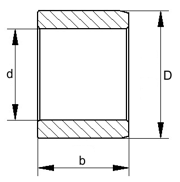
p = 1.5 ⋅ F/A (parabolic) A = d ⋅ b
Where: F (N) = bearing load d (mm) = Ø bearing bore b (mm) = bearing length A (mm²) = bearing area
The permissible surface pressure is determined by the load-bearing material and the lubricant film present, which must remain functional under load. A maximum permissible load of up to 150 N/mm² can be assumed.
L = F · v (thermal load capacity)
For the calculation of plain bearings, a modified version of this formula is used, based on the p·v value. The p and v values specified in the load capacity diagram are limit values at which the frictional heat is dissipated from the plain bearing through heat conduction and radiation, without any heat build-up occurring at the sliding surface. For special cases, the heat balance should be determined by the customer on the basis of the overall design, and heat dissipation measures should be taken into account during engineering where necessary.

Parameters: sliding distance 500 metres, bearing bore Ra ≤ 1.2 Mating material: St 1.4057, Ra ≤ 0.8, HB 240 Sliding direction: rotating, continuous operation at room temperature.


